
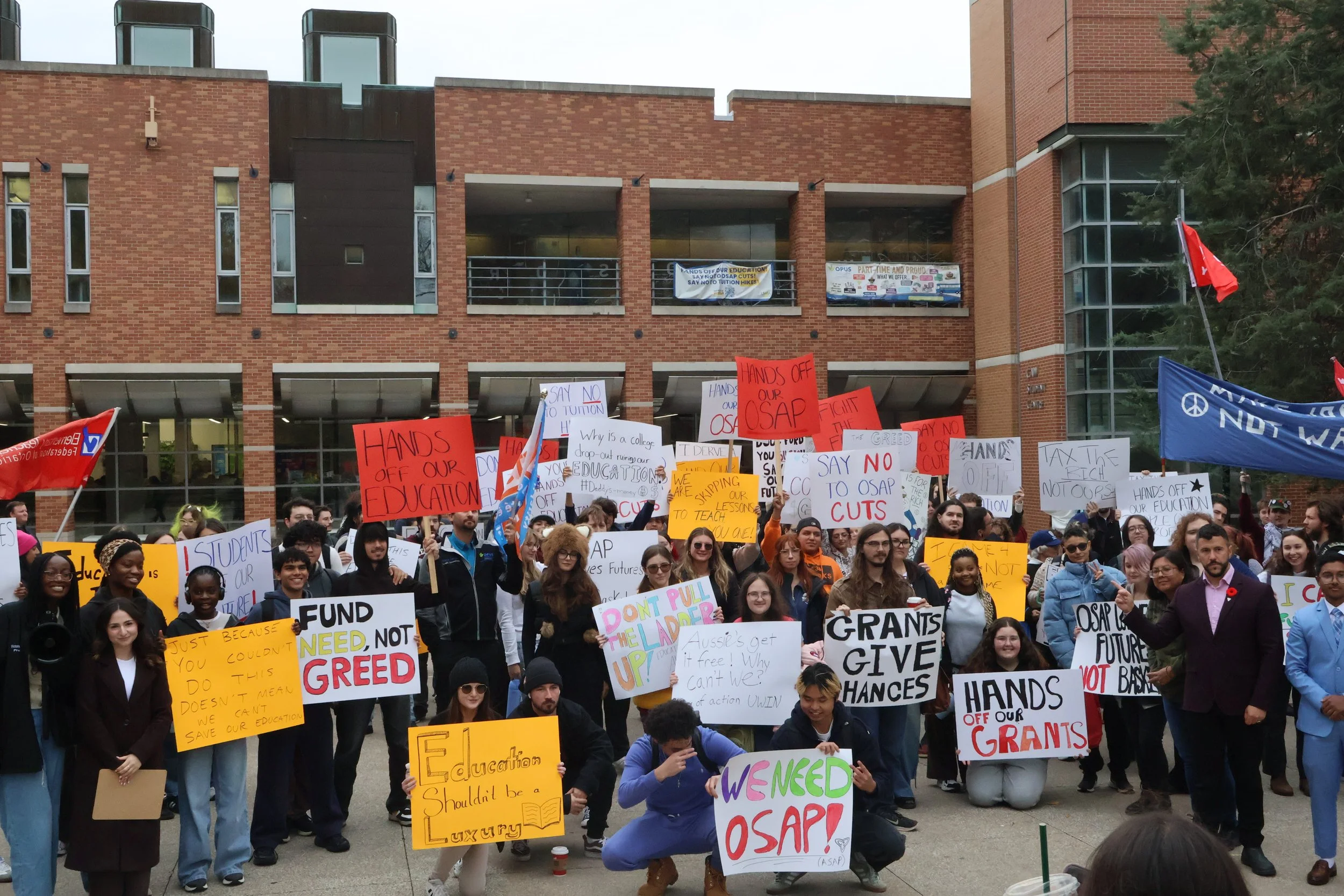
UWindsor students participated in a province-wide walkout on Nov. 5 to protest changes to the Ontario Student Assistance Program (OSAP), Bill 33, and tuition increases. | Taneal Lockstadt / LANCE
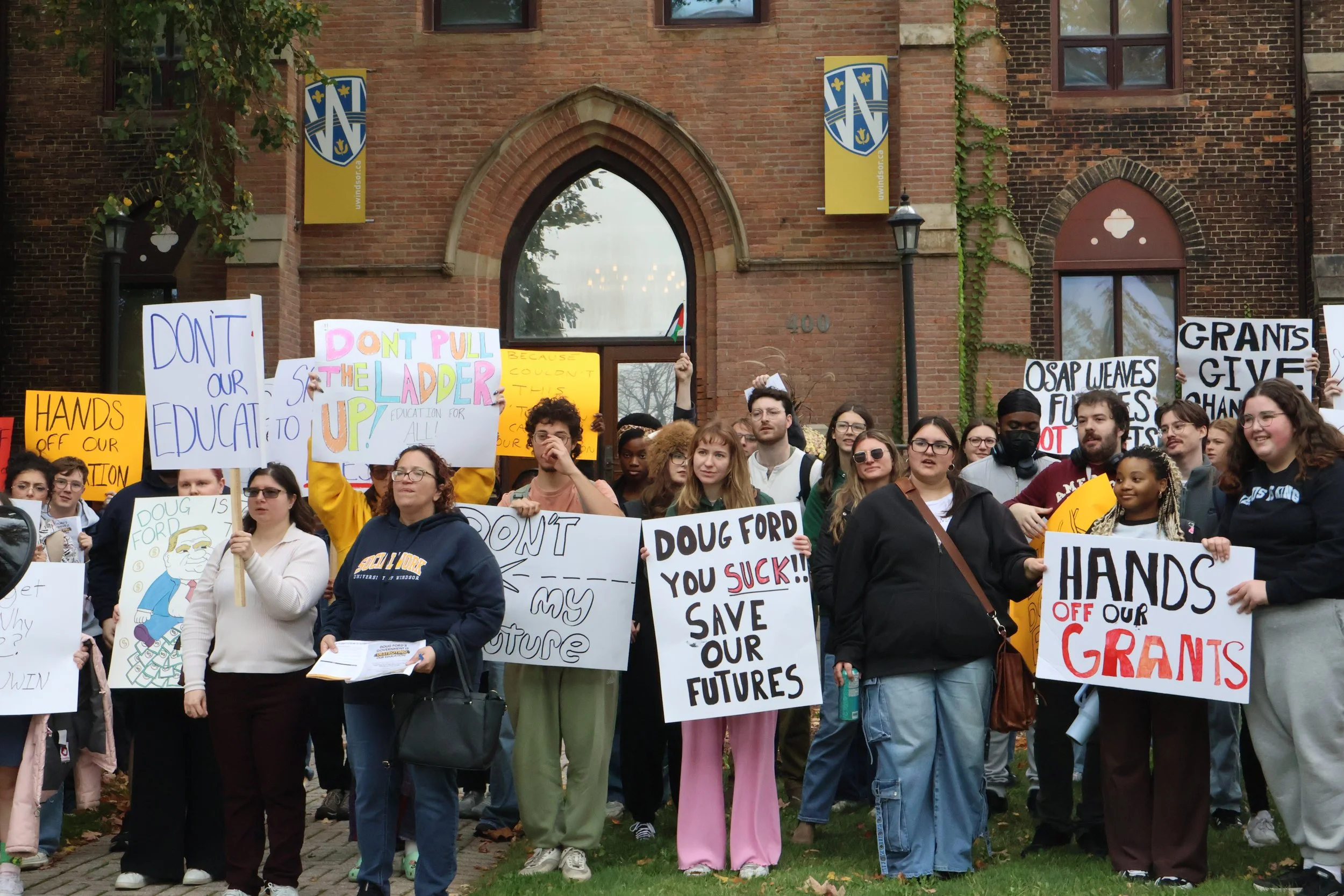
UWindsor students walked out of their classes on Nov. 5 as part of a provincial campaign protesting Bill 33, tuition increases, and changes to the Ontario Student Assistance Program (OSAP).
Launched by the Canadian Federation of Students-Ontario (CFS-Ontario) in response to what they call “persistent and targeted attacks on education,” the “Hands Off Our Education!” campaign mobilized campuses across the province to advocate for accessible and affordable education.
UWindsor’s rally was organized locally by the University of Windsor Students’ Alliance (UWSA). President Victorieuse Sambao said that continued student advocacy is vital to ensure post-secondary education remains a right, not a privilege.
“The students that receive OSAP, the students that do not receive OSAP, the students who are fighting and investing in their future are going to be the leaders, the doctors, the medics, the lawyers, the public officials, the elected representatives of our future,” said Sambao.
“We have to continuously invest in our future, because if you really want to make a stronger Ontario, then you must start now.”
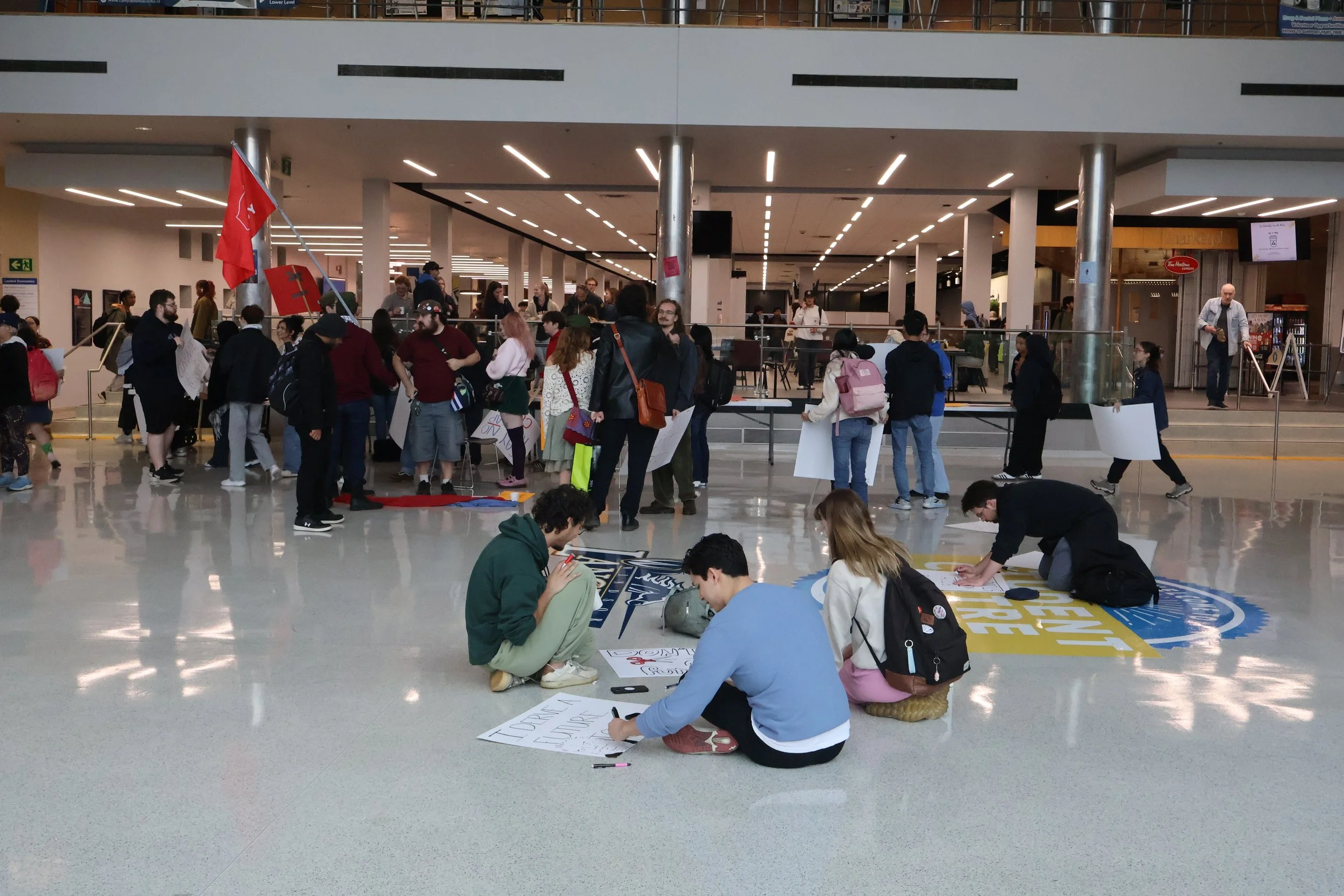
Prior to the demonstration, students gathered in the CAW Commons to make their own signs. | Taneal Lockstadt / LANCE
The “Hands Off Our Education!” campaign calls on the province to reverse Bill 33 and changes to OSAP, remove interest on OSAP loans, end tuition increases or eliminate tuition altogether, and stop “government interference” in public education.
Bill 33, officially known as the Supporting Children and Students Act mandates that publicly assisted universities assess applicants “based on merit,” as well as publish their application criteria and assessment process. The province can also decide which ancillary fees are mandatory or voluntary for students to pay.
Meanwhile, under the new OSAP model, non-payable grants were reduced from a maximum of 85 per cent to 25 per cent. The remaining 75 per cent of student funding is now provided through repayable loans.
The province also ended its seven-year tuition freeze, allowing colleges and universities to increase tuition up to 2 per cent annually over the next three years.
Sierra Farnham, a first-year student in the bachelor of education program, has experienced OSAP before and after the changes.
For Farnham, the new funding model has made balancing the financial demands of school and work increasingly difficult, leaving her more conscious of the debt she will need to pay after graduating.
“Not only am I a full-time student, but I need to actually be working, which is hard, especially in a professional program like teachers’ college,” she said.
“I am in placement where I’m working eight-hour days, five days a week, and I’m not making money from that. I still need to make money, and it makes [school] more difficult and exhausting.”
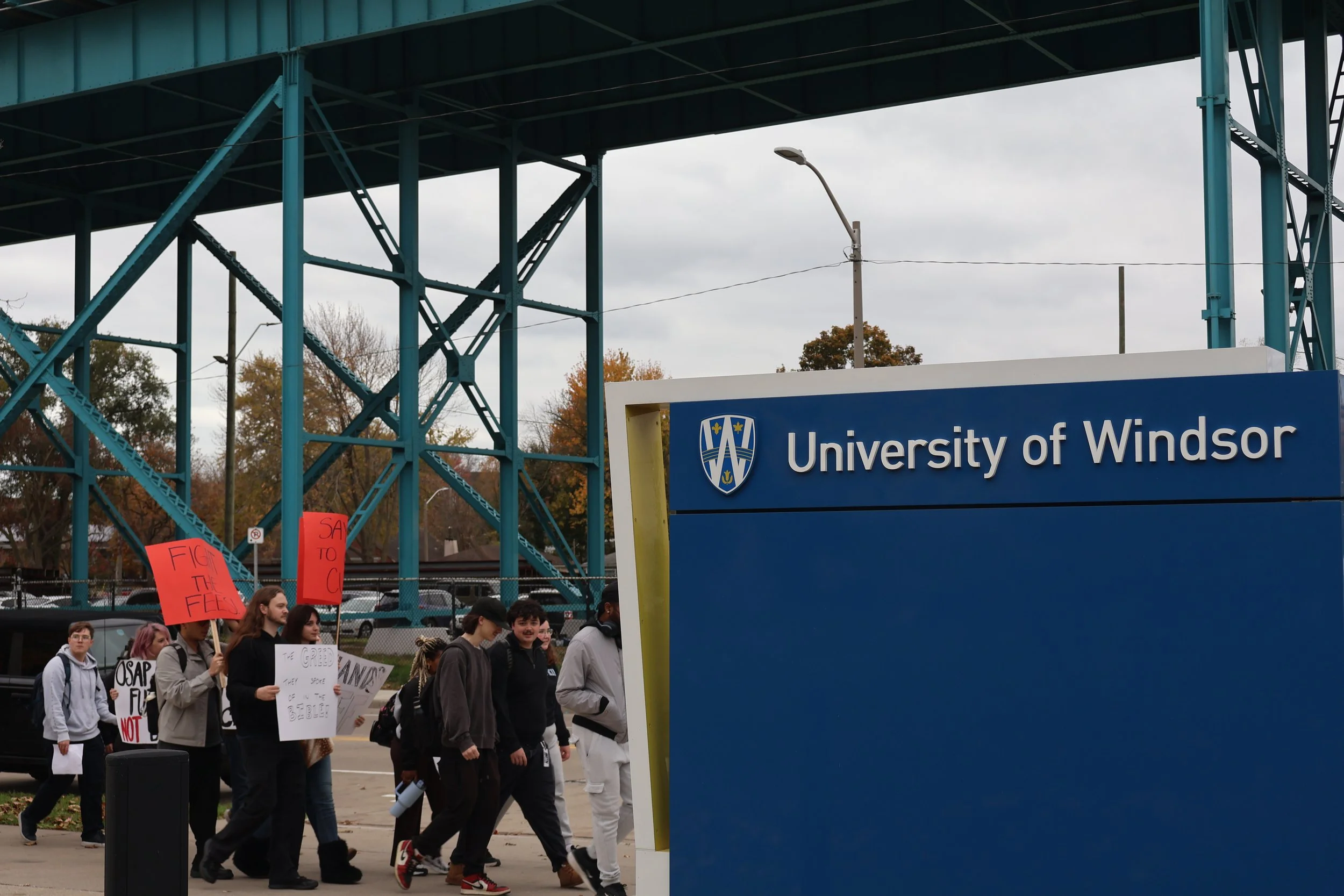
Students participating in the Nov. 5 “Hands Off Our Education!” walkout march down Huron Church Road carry signs protesting tuition increases and changes to OSAP. | Taneal Lockstadt / LANCE
Second-year international relations student Emma Marentette told the Lance that some of her friends have had to leave school because of the OSAP changes.
“I think that even if you're not on OSAP, it's a big part to be here to advocate for not just your future and the access that you have to school, but for your peers as well,” she said.
“I think it's important that we all rally together and tell the government that this is not the way we wanted it to be. And if you want people in the future to have good stable jobs and to be able to flourish, then you need to be willing to support them in that process.”
Some students at the protest, like second-year psychology student Julia Pangilinan, did not rely on OSAP for funding, but said they still felt a responsibility to protest and advocate for their peers.
“Just because it doesn’t affect me personally doesn’t mean it doesn’t affect the next person, or that it won’t affect me someday in the future,” said Pangilinan.
Vice-President of Student Advocacy RJ D’Aguilar hopes that the campaign will encourage greater political engagement among students, including increased participation in future elections.
“My message to the Ontario government is that students are not going to forget about these harmful policy changes,” he said.
“They’re not going to get busy, they’re not going to move on. We’re going to continue to build energy and build structure so that we can resist those changes.”
The UWSA said that they will continue sharing resources and organizing advocacy initiatives on campus to keep students informed and engaged throughout the year.
| Taneal Lockstadt / LANCE