
Who wins gold in the Victim Olympics?—Examining the need to compare
Chances are, if you’re reading this, you are a student of the University of Windsor. Perhaps you are currently attending, or you are an alumnus, or maybe you’re a prospective student who has already received your acceptance letter. Either way, and it may not feel this way, but we are all on the same level here, we all have enough skills and smarts to be admitted into this post-secondary institution. So, why do we feel the need to compare ourselves all the time? Specifically, why is there a need to prove that you are struggling?
Commonly known as “Oppression Wars” or “Oppression Olympics", the Victim Olympics refers to when a group of people compare themselves to each other in terms of who has the biggest disadvantage due to attributes such as race, sex, gender identity, and general circumstances. If you lament over how you only got six hours of sleep the night before, you might get a normal, understanding response like “Oh, that’s awful! You must be exhausted.” Or, you’ll get something like “Well I’ve been getting three hours of sleep each night for the past week.” The rest of that sentence is unsaid, but it’s heavily implied that you don’t have it as bad, therefore you cannot complain.
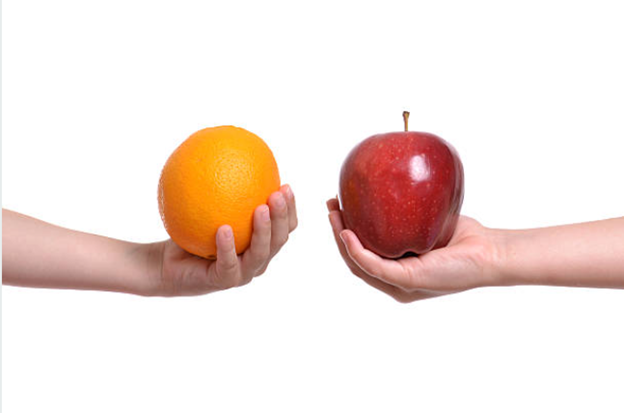
(Taken from iStock: Despite us all being human, comparing ourselves with others will always be akin to comparing apples and oranges.)
There often are comparisons between who has it worse using things like race, gender, class, and physical ability, which is simply not productive. What is the function of one-upping someone because you perceive your circumstances as worse? There is no invalid struggle, even if it’s minor, but it also doesn’t help that humans are wired to compare themselves. Like it or not, we are always on the lookout for how other people compare to ourselves. Certainly, relative to another person, we may feel better about ourselves because we think we are doing better, but in contrast, we feel like we are worse.
As mentioned at the beginning, all, if not most readers may be UWindsor students. We may all be in different years, different departments, and come from different backgrounds, but we all share the UWindsor student baseline. Yet, you will find yourself wondering about other people and whether you’re doing worse. Of course, you may be thinking that you’re doing better than others, but either way, you’ll always think about how to fit into the lives of other people.
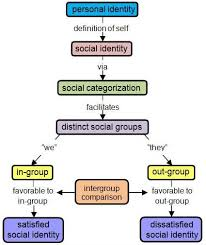
(Taken from ResearchGate, a flow chart of social comparison.)
Are you a better student because you’re taking six courses, working two jobs, and volunteering for an animal shelter?
Are you a worse student for doing none of that, and then failing a course or two? Answer: no.
Is it fair for someone’s self-worth to depend on the positive or negative fortune of the people around them? Answer: no.
Is it productive behavior, and is it a healthy habit to lean into? Answer: no.
We have to remind ourselves that we will always be allowed to struggle and be upset, and that there’s no boxes to tick to make our feelings valid. To think you’re handling things better or worse than the person next to you isn’t productive and nor is it accurate, because nobody knows you better than yourself. Remember that your struggles are your own, and that you're incomparable to anyone else. You don’t have to participate in the Victim Olympics.