
Hollywood should make more Memes, not Movies
Memes may very well be the digital form of street art in its rebellious, anti-foundational, and viral nature. What used to be graffiti on the wall of subways and bus stops has evolved into a form of user-generated content that circles every corner of social media platforms. Known for their lack of uniformity, universal appeal, and dependence on preconceived context, memes may be more than mindless dopamine hits, they may be the most sophisticated marketing tool the world has ever seen.
A study done involving 7 blockbuster films released between 2023-2025 revealed that there is a correlation between meme content and box office performance. Studios must leverage the free labour offered by passionate fanbases and moviegoers to utilize the virality of meme culture on platforms such as Instagram. This can in-turn, promote a film beyond expectations.
According to Box Office Mojo, Hollywood brings in an average of $10 billion in gross revenue every year. Recent years have seen a slight decrease in box office revenue across various titles, but the industry has recovered handsomely since the devastating effects of the pandemic. However, the biggest challenge North American film industries face aren’t pandemics, fluctuating breakeven points, or even AI, it’s capturing the attention of moviegoers.
Traditionally, a film studio markets a film by producing an eye-catching, teasing, and anticipatory trailer which typically runs a couple months before the premiere of the film. This may be followed by posters, press conferences, interviews with the actors and directors, and even billboards. There is still a strong correlation between all these marketing efforts and their respective film’s box office performance. However, their practicality has become questionable.
Trailers don’t promote films anymore; they summarise films. Audiences almost always know the ending of a movie and buy tickets because they want to experience the cultural elements, not the story.
What sells a movie is the fear of not experiencing it in cinemas. The integration of moviegoing with the fast-paced, urgent, and FOMO (fear of missing out) based consumer culture is what can sell a movie.
A thematic analysis of meme content on Instagram addressing Barbie (2023), Oppenheimer (2023), Deadpool & Wolverine (2024), How to Train Your Dragon (2025), Superman (2025), F1 (2025), and Zootopia 2 (2025) produced four theme categories of memes.
The “Eventization” of watching the movie in cinemas, the music or soundtracks, references to scenes from the movie, and influencer collaborations were identified as distinct types of content which were organized into themes.
Out of the four themes, when a meme made a reference to a scene from the movie, the post experienced enormous levels of engagement. This suggests that when content takes audiences back to the experience of watching the movie, the reaction is very likely to mobilize engagement. The theme outperformed all the others by a significant margin.
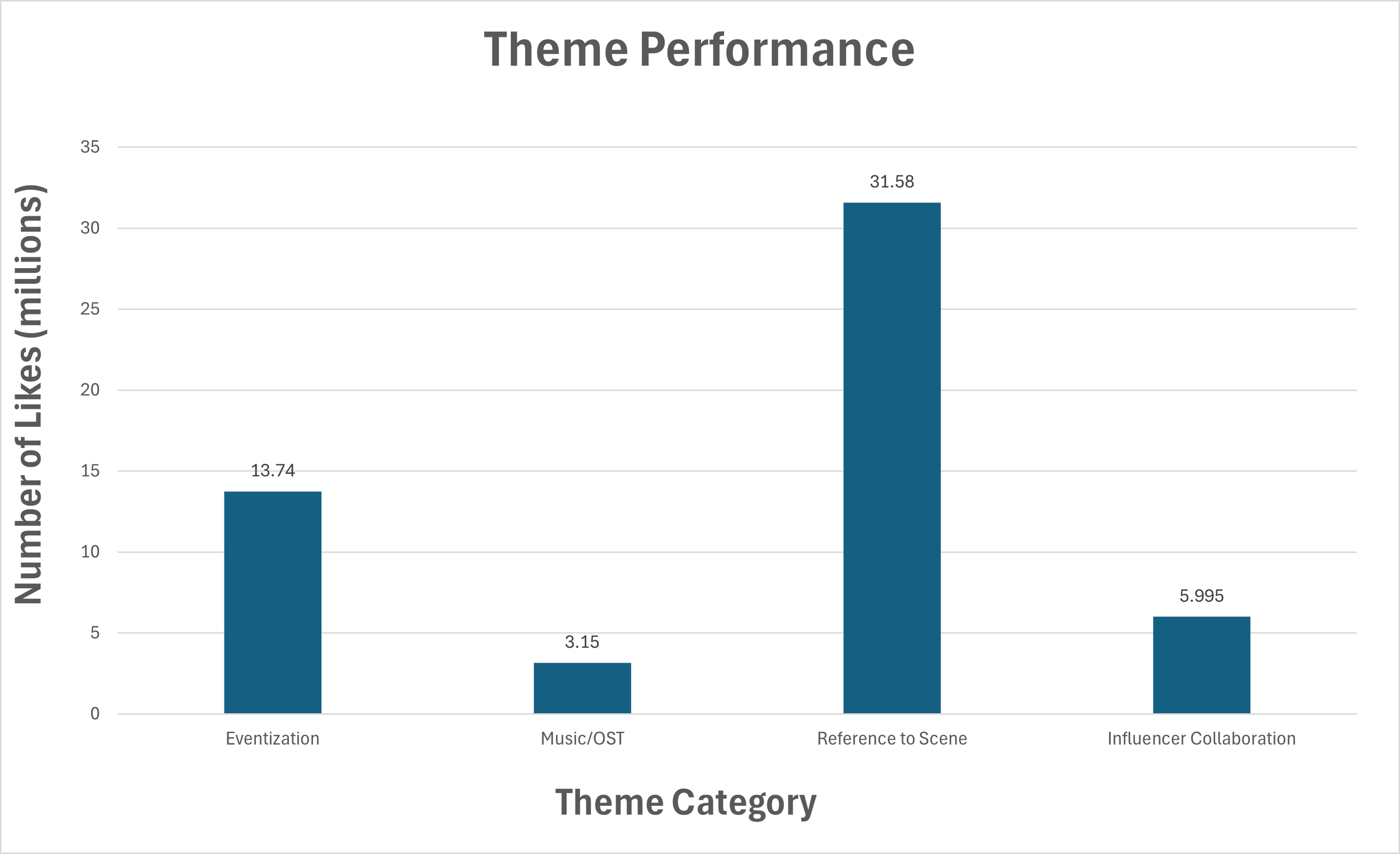
The comparison of meme content and the number of likes achieved by each theme category in millions.
Zootopia 2 closed off its box office run with over $1.8 billion placing it amongst the highest grossing films of all time. The animated children’s tale wasn’t just the highest grossing film on the list but also had the highest level of post engagement from any other movie in this study.
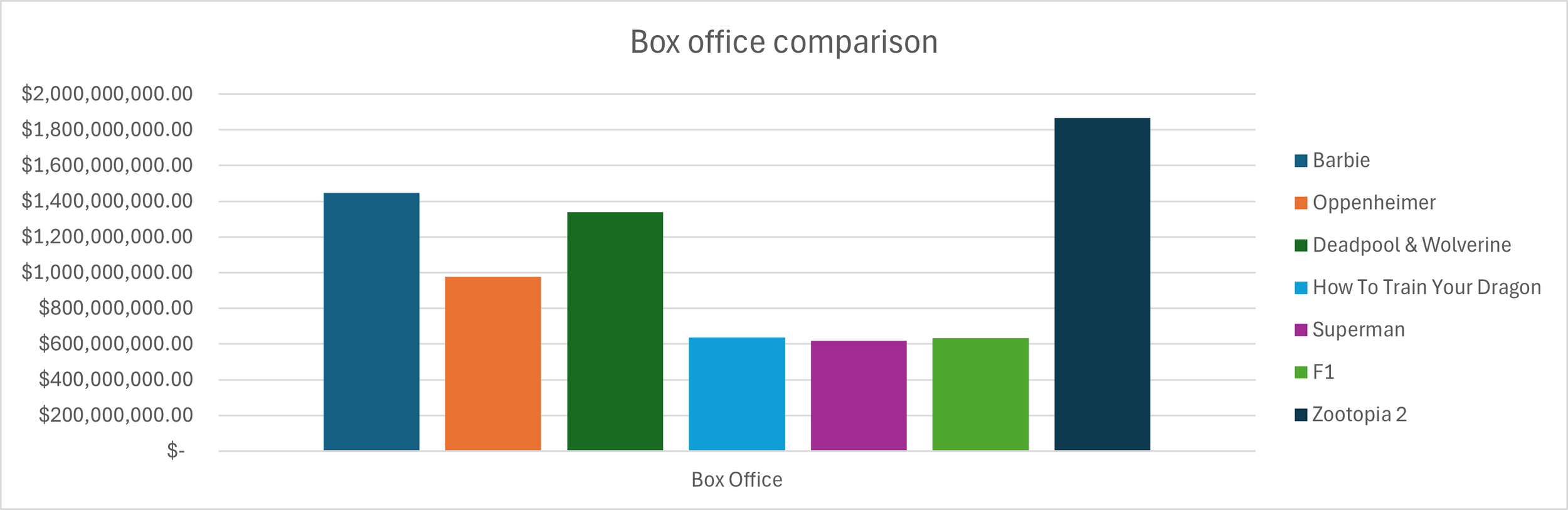
The box office performance of all the films a part of this study. Zootopia 2 has a staggering run with over 1.8 billion dollars globally.
Another factor that was assessed was post frequency and when exactly the memes were posted relative to the premiere date of the respective film. All films were found to experience a peak in memes during the week of the premiere, and up to a week following the premiere. This suggests that memes can play a pivotal role in the opening week box office performance and determine whether late moviegoers buy tickets or not.
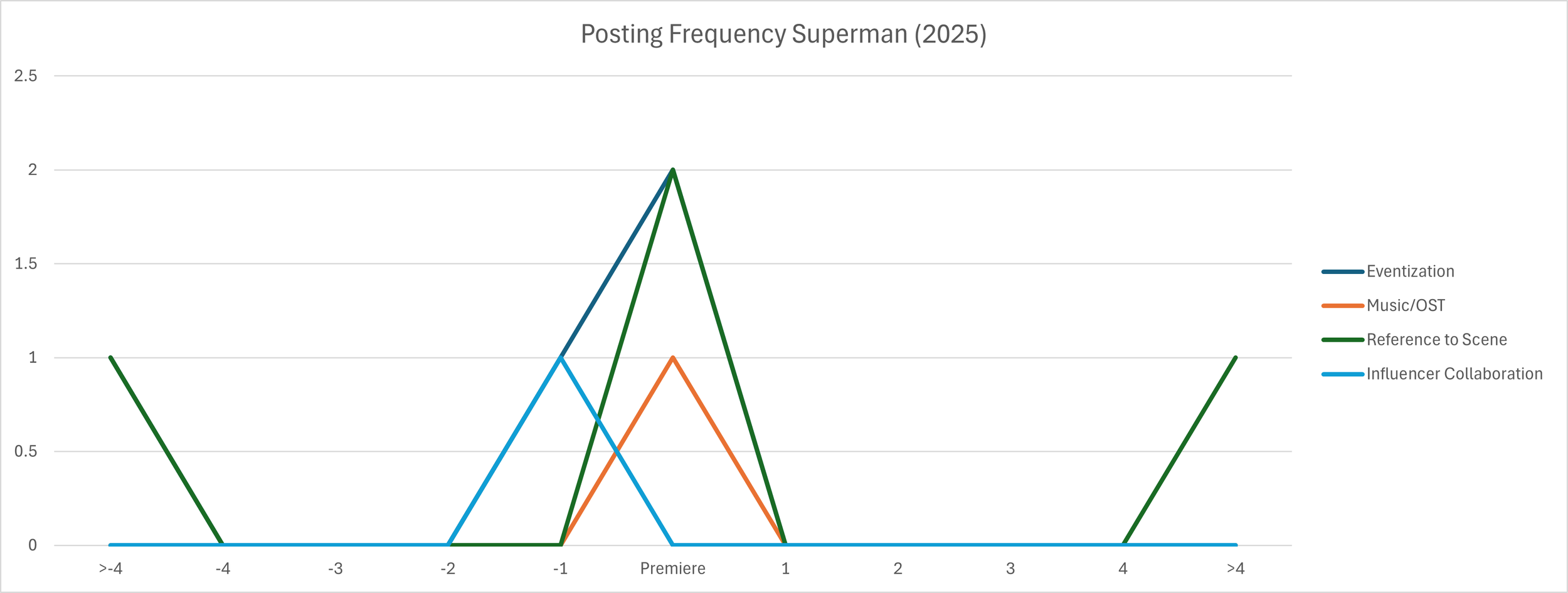
The posting frequency of memes addressing Superman (2025) between 4 weeks prior to the premiere, and 4 weeks after the premiere. A peak in content frequency is observable during the premiere week and one week after.
One downside to leveraging user generated content is that, like street art, the studio cannot control the narrative of the film’s reputation. If the fans don’t like it, the memes will reflect their consensus accordingly.
However, this can also work to a studio’s benefit when the audience and industry critics are at odds with one another. The recent success of Michael Jackson’s biopic Michael (2026) demonstrates how a loyal fanbase can sustain and amplify the hype of a movie against the resistance of poor critical reception.
Indeed, memes alone cannot drive a movie to a billion dollars at the box office. There are conditions that need to be met prior to the utilization of memes for promotion. Memes rely on one thing to be successful at communicating complex messages in an instant – cultural context. Therefore, a film must already be famous to become popular through memes. If not the story or its fictional aspects, the practical aspects must be famous. Anyone would buy tickets to an action movie starring Tom Cruise and Denzel Washington, even if the story was generated using ChatGPT. The abundance of content addressing the upcoming Marvel movies supports this argument without any contradiction.
Even so, memes are known for their resistance to structure and uniformity whether it be rhetorically or behaviourally. Taming memes for commercial use is like trying to put a leash on a tornado - it’s more likely that you will get dragged around doing more damage than good.
Ultimately, the question of whether memes are more effective at promoting Hollywood blockbusters than trailers, and keeping the capricious industry at bay, will only be answered by the people that make them.
