
UWindsor students raise awareness for OSAP cuts
University of Windsor students joined the UWSA and Student Societies yesterday to raise awareness and push back against recent changes to OSAP funding. The rally which took place across campus was part of a province-wide day of action bringing together other universities in the province and the Canadian Federation of Students.
Since the announcement in February, student worries regarding education funding have been growing. Messages such as ‘keep education debt free’ and ‘students united will never be defeated’ were heard at the rally. “Education is a right. Every person deserves the opportunity to get an education, and when you start taking away that opportunity by cutting affordability, we’re infringing on our younger generations right to be here,” said Ella, a second-year law and politics student.
Video: Students of UWindsor march through their campus chanting “What do we want - free education, when do we want it - now”
On February 12th, the provincial government announced major changes to its Ontario Student Assistance Program. OSAP is broken into two supporting factors; grants (money you don’t pay back) and loans (money you do pay back). Currently, students that qualify for the program can receive up to 85 per cent of grant money and 15 per cent of loans.
Starting in Fall 2026, students will see a reduction in non-payable grants from a maximum of 85 per cent to a maximum of 25 per cent of funding. The remaining 75 per cent or more will be provided as repayable loans, leading to higher debt for students. Additionally, the seven-year tuition freeze is being lifted, allowing colleges and universities to raise tuition by 2 per cent annually over the next three years.
“A stronger, more sustainable OSAP system will ensure financial assistance remains available for future generations while supporting students’ appropriate investment in their education and success”, the provincial government’s website states.
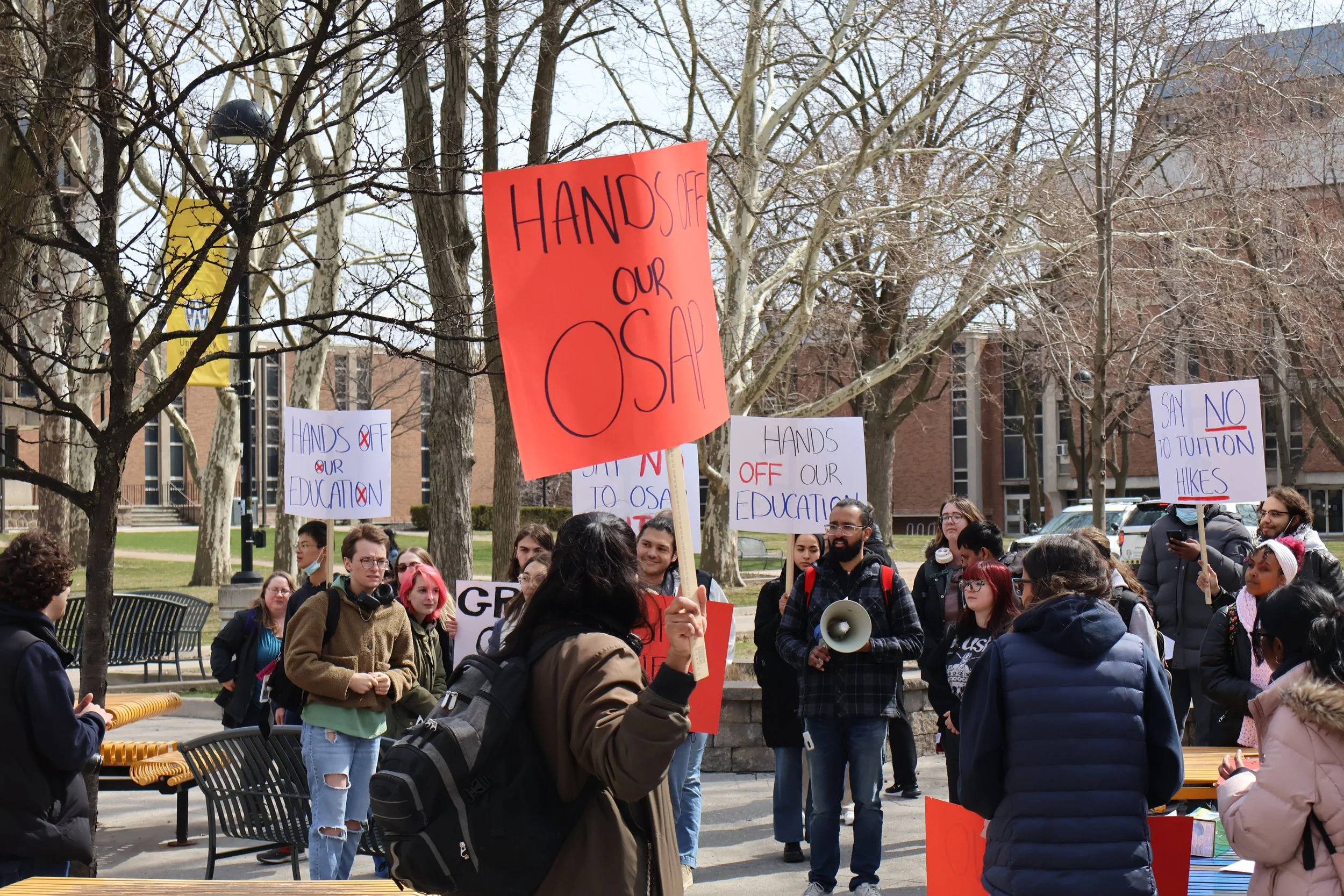
Image: Students hold banners opposing the recent change to OSAP funding. One banner reads “HANDS OFF OUR OSAP”.
Despite the program being provincial, the funding students receive through OSAP comes from both the provincial and federal governments. A number of factors go into calculating how much funding a student receives, including course load, marital status, and household income. Since funding is shared between both levels of government, different policies are used to determine how much students receive.
According to a report from CBC News, up to 60 per cent of OSAP funding can come from the federal government, with the remaining 40 per cent coming from the province. The overall impact on students remains unclear as the changes being implemented only apply to the provincial portion of funding. However, students could see a noticeable shift towards loans in the fall. Changes take effect for programs starting on or after August 1, 2026, with the 2026-2027 OSAP application expected to be released later in the spring.
Alaina Nicholson, a fourth-year CMF student, expressed worries for her sister who will likely fall into student debt much easier when the changes are implemented. “Debt is one of the scariest things that faces anybody in this country. I think that’s what holds a lot of people who don’t have the help to do post-secondary education because they don’t want to be in student debt.”
These changes come at a time when unemployment rates for people aged 15 to 24 sit at over 15 per cent, according to figures on the government’s website. It is seven percent for people aged 25 to 54. In a press conference, following the announcement of decreased OSAP funding, Doug Ford told students to “not pick basket-weaving courses” and urged them to choose courses that will drive economic growth such as healthcare or the trades.
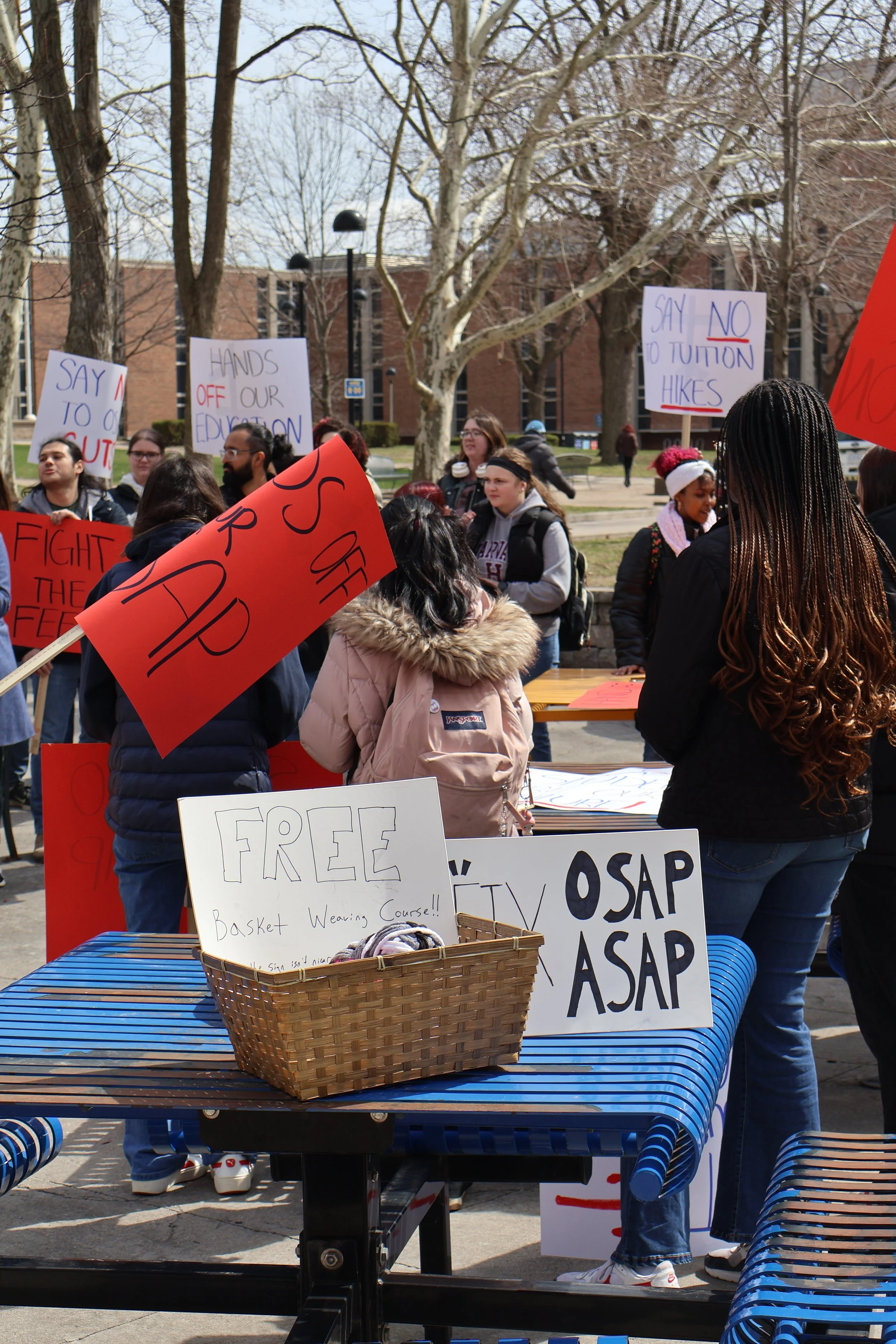
Image: Students gathered outside the CAW Student Centre wait for the rally to begin at 12:30pm. One banner reads “FIX OSAP ASAP”.
“Any education is valuable to an individual… we need people of every background in this economy. We need people doing things that are different, that are new, and that are going to drive new methods of making money,” Ella expressed in response to Ford’s comments.
For organizers and attendees, the message was clear: decisions regarding education should be made with the students they directly affect. “We all understand that universities can no longer be sustainable based on the way that they were functioning previously,” said UWSA Student President, Husam Morra, “we don’t live in a vacuum where students can just keep paying more and more and more and receive less.”
As the province moves forward with these changes, students are calling for greater transparency and consultation to ensure long-term, sustainable, and affordable post-secondary education.