
What’s the Rush?—Why Patience is a Dying Art
Waiting for a Tiktok to load, even a few seconds too long, is enough for many of us to swipe right on to the next one. The slightest delay when texting someone can trigger our “ignored” alarm bells. Our modern society has taught young people that instant gratification is now a standard and as a result, a sense of urgency follows every interaction and activity we pursue. The constant and consistent availability and bombardment of new information on our social media feeds is conditioning us to have exceedingly short fuses.
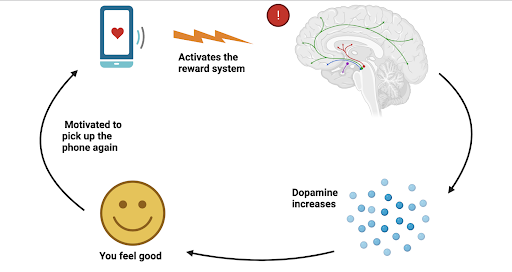
The design of most major social media platforms, whether it’s short videos, endless scrolling, trending topics, or instant updates, exploits our brain's desire for new stimuli. This provides us with never-ending doses of new information that reward our brains with little pops of endorphins. Gradually, this not only trains us to chase after those short, fast-acting feel-good dopamine hits, but also fries our attention spans to the point where delay seems painful.
We’re being conditioned to not take the time to savour and digest any information we receive, but to instead accept things at face-value at a lightning speed rate, and ultimately we move on. This conditioning has unfortunately bled into our real, offline lives too.
When we do not exercise these qualities in our digital lives, we start lacking these essential human characteristics offline too. When we have become so accustomed to information coming in bite-sized pieces, students no longer have the concentration to read a book without a YouTube video and music playing in the background, or complete a few take-home assignment questions in one sitting. When conversations do not move along bar after bar, they start to feel dull and uninspiring; our minds start to wander. And when there is not an immediate and rewarding payoff from taking up a hobby (most of which take weeks or months to really reap the benefits), most give up because the payoff is simply too far away to ever be experienced.
The speed-dictatorship also influences the way in which we communicate with other people. We form opinions on headlines, we react instantly and don’t let a story’s narrative unwrap fully before drawing conclusions and jumping to negative judgments or interpretations of intention.
Patience should go far beyond just waiting; it’s also about active listening and the ability to process information carefully with reflection. But this has become increasingly difficult when most technology is designed to demand our instant attention and an instant response.
Of course, there is absolutely no intention of turning off all social media and devices from our lives altogether; technology has become far too integral to modern social interactions and communication. Social media helps people around the world connect with friends and family, it has created new and innovative avenues for sharing and collaborating information and has given artists and small businesses opportunities that were once a mere dream. But we must not forget that most social media features exist not to encourage thoughtfulness, deliberation, or a deep understanding but to elicit your attention, your likes, your clicks, and that means demanding it rapidly with a constant flow of novel content that makes our minds speed toward the new and then leave it.
As attention becomes a scarce commodity, this speed culture becomes our dominant mode. Speed becomes our goal because we have become wired for stimulation, any stimuli will do to fend off the terror of slow time, of being alone with our thoughts. So instead of living at a full pace, we must be able to slow ourselves down. Slow down the speed in which we receive and process information and we are able to better digest all the world around us. We regain our ability to think critically.
The good news is that we can learn to pace ourselves again. We have the ability to break ourselves from this cycle of immediacy. Taking a pause before reacting, engaging in activities that promote slowness such as reading, meditating, engaging in physical activities without devices, or undertaking activities that do not show results instantly like knitting or learning a new language can help repair our attention spans. The best of both worlds can exist if we are aware of this underlying challenge, consciously try to slow down our pace of consumption of information, and make our personal and mental well-being the priority instead of speed and efficiency.
One of the more valuable and rarer qualities in the modern world is patience. People with patience pause to listen and think before they speak. These people know that sustained progress occurs over time, not instantaneously, and that patience requires more than the ability to wait for something, but the capacity to hear another’s thoughts and experience others’ experiences without judgement or pre-conceived ideas. These are not the skills our modern digital world demand, but they may in fact be the skills most desperately required to regain meaningfulness and escape monotony in our lives.
Perhaps the greatest, and most empowering, step we can take in a digital era is to purposefully hit the brakes. The only alternative path from speed is not simply slowness for its own sake but rather thoughtfulness, intention and a deeper presence in our own lives and the world around us, giving the best of us to whatever experience or person we encounter.